South America | Chile | Castro

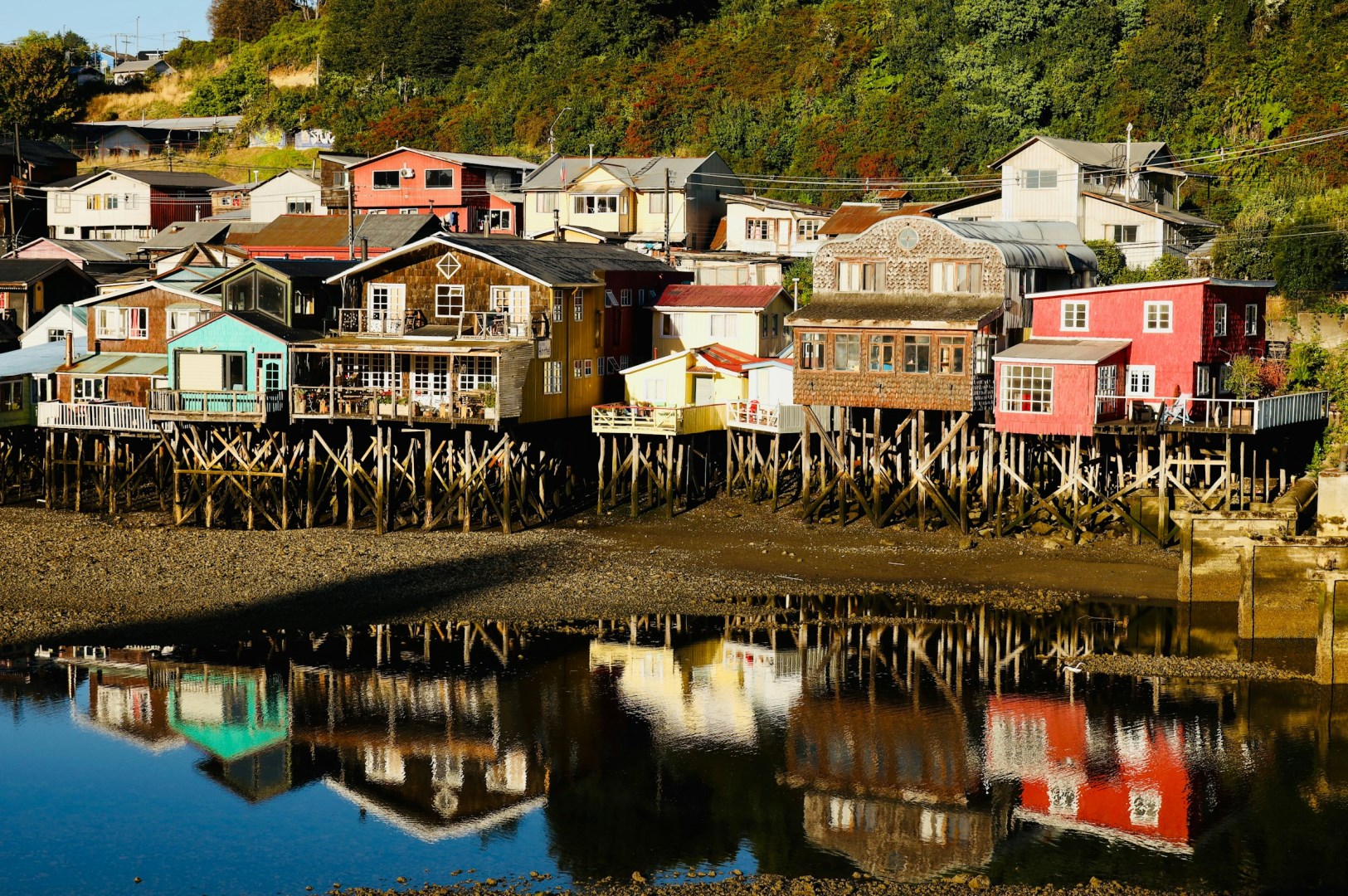
Castro is the capital of Chiloé Province on the island of Chiloé in southern Chile, set along the eastern shore of the Gulf of Corcovado. The city is recognized for its distinctive waterfront, hillside neighborhoods, and traditional wooden architecture. Its most recognizable feature is the palafitos, houses built on wooden stilts above the tidal edge, particularly around the Gamboa and Río neighborhoods. Castro also serves as an important commercial and transportation center for the island, connecting visitors with surrounding communities, rural landscapes, and coastal areas.
Chiloé's cultural identity is strongly represented in Castro through architecture, crafts, food, and local traditions. The Iglesia de San Francisco de Castro, facing the city's main square, is one of the island's characteristic wooden churches and forms part of the UNESCO-listed Churches of Chiloé. Traditional Chilote houses, wooden shingles, carved details, and colorful façades can be seen throughout the city. The Museo Regional de Castro presents archaeological objects, historical material, and examples of local domestic life, while the Feria Artesanal de Castro features woolen goods, woven textiles, woodwork, and other island crafts.
The landscape around Castro combines wooded hills, farmland, tidal waterways, and views across the channels of the Chiloé archipelago. The palafitos along the waterfront are best appreciated from viewpoints and walking areas around Gamboa, where the houses appear above the changing tides. The nearby Parque Nacional Chiloé protects temperate rainforest, dunes, wetlands, and coastal habitats on the western side of the island. Within and around Castro, smaller natural areas and coastal viewpoints provide access to the island's characteristic scenery, where rain, forests, and the sea shape the local environment.
Chilote cuisine makes extensive use of potatoes, seafood, shellfish, and other local ingredients. Curanto is the island's best-known traditional dish, prepared with combinations of shellfish, meat, potatoes, milcao, and chapalele, traditionally cooked in a pit or prepared in a large pot. Milcao and chapalele are potato-based foods commonly associated with Chilote cooking. Castro's markets are particularly useful for encountering local produce and seafood, with the Mercado Municipal and Feria Yumbel offering fish, shellfish, vegetables, prepared foods, and regional products. The island is also known for its many varieties of native potatoes.
Other Popular Destinations in Chile


